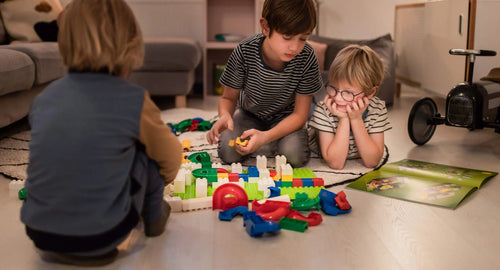
What to do when you're exhausted from parenting as soon as you've cleaned up the toy battlefield, the child scatters the whole room, and the crying to be held keeps repeating endlessly? A feeling of helplessness or a fleeting urge to give up doesn't make you a bad parent. You’re just overwhelmed by the daily pressures of raising a young child.
Let's temporarily set aside those unnamed tasks, take a deep breath, and rediscover relief for yourself with Mykingdom.
When should feelings of fatigue from parenting receive proper attention?
It's not just lack of sleep
Caring for a child always requires a large amount of energy. However, if exhaustion lasts for a long time, noticeably affecting mood, daily activities, or your ability to care for yourself and your child, parents should take this issue seriously.

In psychology, parental burnout is the concept describing a state of emotional and physical overload related to the caregiving role that lasts. However, parents should not label or diagnose themselves based solely on a few temporary signs of fatigue.
Signs that parents are overwhelmed
-
Easily irritable over very small things: Getting angry just because a spoonful spills or a grain of rice falls, then feeling remorseful and guilty toward your child.
-
Parenting becomes burdensome: Feeling it hard to find joy in the child's play; each day seems like an endless string of chores.
-
Longing for a moment of personal quiet: Craving a short period for yourself, just to drink a full cup of tea or coffee while it's still warm, without being interrupted by calls.

Note: If feelings of despair persist, you feel you have completely lost the ability to care for yourself or have negative thoughts, actively seek help from relatives and health or mental health professionals.
Why does striving for perfection increase parental pressure?
One of the factors that makes modern moms stressed is the invisible pressure of wanting to become the perfect parent.
Images of a "perfectly polished" parenting journey on social media sometimes cause us to set standards too high: the child should sleep through the night early, weaning should be perfectly arranged, and development should exceed age norms.

In addition, anxiety leads parents to tend to overprotect, always wanting to be present in every activity of their child. When juggling work and unnamed household tasks without specific sharing from a partner, the parents' energy can easily be exhausted.
What to do when parenting leaves you exhausted? 5 steps to help parents regain balance
Summary of 5 solutions to help parents feel lighter:
-
Accept being a "good enough" parent.
-
Give yourself a short break each day.
-
Reduce the pressure from social media standards.
-
Specify requests for help with housework to family.
-
Gradually help your child develop the ability to play independently.
Learn to be a "good enough" parent
According to psychoanalyst Donald Winnicott, children do not need perfect parents; they need a caregiver who is "good enough." A room not yet swept or a simple meal does not make a child's childhood less warm.

When you reduce the pressure to complete everything perfectly, you’ll have more space to breathe and enjoy time with your child.
Create a short daily break for yourself
Have an open, frank talk with your partner about swapping baby duties. A short spell of warm bath, listening to a song, or sitting quietly to drink water without interruptions is a practical way to help parents recharge.

Reduce pressure from social media
Temporarily turn off notifications or limit following content that creates a sense of comparison. Each child has a unique development pace, and there is no single parenting formula that is perfect for every family.
Make specific requests for help
Instead of silently enduring and then erupting, request concrete help from family: "Could you watch the baby for a bit to help me?" or "Today you handle tidying the kitchen." Clear task assignment will help ease the mental load on mom.
Step-by-step guidance for teaching your child independent play
Parents everywhere wish parenting could be a bit easier, but a child's ability to play independently takes time to develop. Young children often seek adults for attachment, routines, or simply because they don't yet know how to start an activity.

Being patient as you guide your child to explore on their own lays the foundation for the child's initiative, while also giving parents more time for themselves.
Suggested toys to support independent play and give children opportunities to explore on their own
To help children learn to play independently, the space and the type of toys matter greatly. Open-ended, safe, and easy-to-clean-up toys will encourage the child to focus without adding extra cleaning duties for parents.
72-piece magnetic puzzle set PEEK A BOO PAB028
At age 3, curiosity drives exploration; the 72-piece magnetic puzzle set from PEEK A BOO is an ideal choice to help the child get comfortable with active play. The plastic is safe for kids, and the pieces connect securely with a gentle magnetic attraction.

The child can freely explore transforming flat 2D shapes into models according to their imagination without continuous adult intervention. In particular, the magnetic blocks attract to each other, making cleanup after play much quicker and easier.
Green Grown Up Multi-Use Board PAB034
At age 3, when the child loves drawing, the Green Grown Up multi-use board offers the child a distinct creative corner. The flexible two-sided design (chalk drawing and marker) with 54 accessories helps the child freely sketch ideas without smudging on the floor or furniture.

The frame height can be easily adjusted to match the child’s height, with a built-in convenient tray to encourage the child to put away drawing tools after use, helping mom ease the worry of tidying up the battlefield.
Racetrack and Hot Wheels model cars
For kids who love movement, the sliding motion of Hot Wheels model cars always draws them in. Mechanical track sets such as the Super Bat Tire Station or Turbo Jump give kids the chance to gauge force, launch, and repeatedly test the cars over obstacles.

Purely mechanical, non-electronic play that doesn't repeat electronic sounds offers a lively play space for the child and gives parents a quiet moment to rest.
ART PUZZLES thinking puzzles
To foster a habit of quiet concentration in children without relying on electronic devices, 3D puzzles from ART PUZZLES are a very suitable choice. The themes range from Disney's Frozen fantasy world to Marvel Spider-Man superheroes, making it easy for parents to match each child's interests.

The vivid 3D effects create excitement that encourages the child to persist in exploring, trial-and-error with each puzzle piece, bringing the whole family a peaceful space after a long day.
If you have ever wondered what to do when parenting is exhausting, remember that a happy family always starts with taking care of yourself. Don’t hesitate to allow yourself to rest when overwhelmed.
When you need to find toys that help your child develop independence and concentration, you can visit the Mykingdom store or website to choose the best companion for your child.
References: Healthline, COPE
Read more
What should dad do when taking care of a young child to make things easier for mom?
How much time should you spend with your child? Tips for busy parents