Taking care of a little baby is a journey full of joy but not without pressure. Sleepless nights, disrupted routines, and the feeling of having little time for yourself can easily push a mother to the brink of exhaustion.
There are days when a mom feels completely drained of energy even though she has been trying her best. If you're experiencing that feeling, remember that you are not weak; you’re just overloaded and need rest. So what should a stressed new mom do to reduce the pressure and regain balance?
Understanding postnatal emotions correctly: Recognizing common mental states after childbirth
When facing fatigue from caring for a young child, correctly identifying emotions will help you have the right outlet:
-
Stress when caring for the baby: A state of physical and time overload when taking care of the baby. This condition will improve noticeably when mom gets enough sleep and someone shares the housework.
-
Baby Blues syndrome: Feelings of sensitivity, crying easily, and restlessness appearing in the first days after birth, usually resolving after about 1–2 weeks.
-
Postpartum Depression (PPD): A mental health issue that may start at any time within the first year after birth. Symptoms include persistent sadness, loss of interest, exhaustion or difficulty bonding with the baby. This condition requires evaluation by a specialist.

What should a stressed new mom do? 5 practical ways to reduce stress
To gradually ease the mind and protect your health, you can apply the five practical tips below:
Step 1: Pause for a few minutes when the baby cries to regain calm
According to safety guidelines from the American Academy of Pediatrics (AAP) and the UK National Health Service (NHS), when you feel overwhelmed or about to lose your temper at the sound of your baby's cry:
-
Place the baby on his back in a safe crib (firm surface, no soft pillows, loose blankets or stuffed animals).
-
Move to the adjacent room for a few minutes, take a deep breath, and take a sip of warm water to lower your heart rate.
-
When you have calmed down, go back and check if the baby is hungry, has a fever, a wet diaper, or is uncomfortable. If the baby cries persistently with signs of illness (fever, trouble breathing, not feeding), take the baby to be examined.
-
Safety principle: Never shake a child under any circumstances to avoid dangerous brain injury.

Step 2: Lower your expectations for housework
Unwashed dishes or unfinished cleaning can wait. Unfinished chores won’t harm the baby, but a mother’s exhaustion needs care. Allow yourself to rest or order takeout when you’re tired.
Step 3: Communicate specific tasks with your partner
Instead of saying vaguely "Can you help me," make clear requests: "Take the baby for 30 minutes so I can shower and nap" or "Tonight you handle diaper changes for the baby." Clear tasks help both of you work more smoothly together.

Step 4: Give yourself permission not to be perfect
Pediatrician and psychoanalyst Donald Winnicott introduced the concept of the "good enough mother" (good enough mother). The child does not need a perfect mother at every moment. A mother can be tired and need help; what matters is that she takes care of the child safely without neglecting herself.
Step 5: Look for short breaks
Just 10–15 minutes to enjoy a hot cup of tea, listen to your favorite music, or refresh your face with a quick rinse when someone can watch the baby can be a highly effective way to reduce stress for a mom.
Encouraging the joy of discovery: Toy ideas for babies by age
Choosing age-appropriate toys will stimulate curiosity and help your child gradually become accustomed to exploring.
Remember: Toys do not replace adult supervision, but they create space for mom to sit nearby and rest while the child plays safely.
Stage 0–6 months: Encourage sensory exploration
At this age, babies are curious about high-contrast colors, soft sounds, and they love wiggling their arms and legs when awake. A Fisher-Price piano play mat will be an ideal play space: the hanging arches stimulate vision, and the keyboard under the feet plays pleasant music whenever the baby kicks.
You only need to place the mat in a safe spot, sit beside your child to watch, and take the opportunity to relax your body.

Stage 6–18 months: Developing hand-eye coordination
Once they can sit up steadily, their tiny fingers will enjoy grasping, opening and closing, and picking up objects. Stackable towers or shape-sorting toys that fit in small hands will help them develop fine motor skills and dexterity.
These small challenges help the baby focus on exploring shapes, giving mom a little more time to rest nearby.

Stage from 18 months onward: Developing creative construction thinking
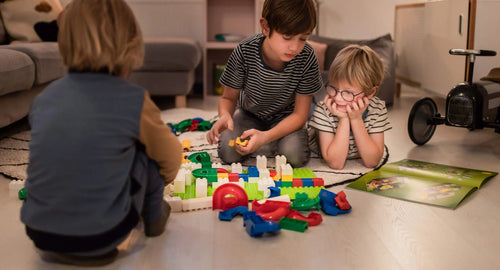
As this stage arrives, the child’s imagination develops rapidly and they always want to create with their own hands what they see. With large, safe bricks for little hands, LEGO DUPLO is a wonderful suggestion for stacking, building a house, or a simple train.
The process of tinkering with building blocks stimulates spatial thinking and helps the child gradually get used to playing independently.

When should a stressed mom seek a doctor or mental health professional?
Stress is normal, but if you notice the signs below, you should proactively contact a doctor or mental health professional early:
-
Persistent sadness, anxiety, feelings of helplessness or exhaustion.
-
Chronic insomnia even when the baby is sleeping soundly.
-
Loss of emotional connection or not feeling attached to the baby.
-
Emergency signs: Thoughts of harming yourself or the baby; signs of confusion, or severe panic. Family should take the mother to the nearest medical facility immediately.

The journey of raising a child doesn’t require you to always push yourself to be strong. Instead of wandering around wondering "what should a stressed new mom do," start by listening to your body, sharing housework, and giving yourself the most gentle care.
At Mykingdom, we believe that safe, quality toys are the bridge that unites families. Parents can visit Mykingdom's nationwide store network or visit the website to choose toys suitable for their child's age and interests, okay!