In everyday life, disagreements and frictions are inevitable. Parents may know that their child's toy was stolen by a friend, but not all parents know how to teach their children how to handle this situation so that they can cope and prevent this action easily. Parents, let's learn a little about children's psychological development as well as how to teach children to handle situations when their friends take away their toys in the article below:
Common ways parents handle when their children take away their toys
Make your child be generous and give his toys to you
Most of the "culprits" who steal children's toys are relatives or neighbors. When a situation arises where a child's toy is taken away by a friend, many parents, out of fear of offending these children's parents, force their child to share and give the toy to their friend. Children will feel angry and cry when forced, and parents will feel ashamed because their children are not generous with friends.
However, if forcing children happens regularly, children will feel disrespected, leading to psychological insecurity. Especially for children with timid personalities, the damage will be even greater. Gradually, children will not know how to refuse, or even endure to please others without daring to fight for their own rights and interests.
Stand by your child's side and teach them to handle situations appropriately
Some parents have a more rational way of handling situations when their children are robbed of their toys. They do not force their children to give in, but teach them how to share and play with friends.
It's completely normal for children to not want to share their toys with you. This demonstrates the development of proper awareness of personal property rights. Therefore, parents should not force their children to give in, but teach them to handle situations appropriately as well as understand the meaning of sharing.
Any child needs to have their property rights respected. When children are self-aware and want to share, they will feel happier. This also makes an important contribution to building children's sense of self-esteem and confidence in the future.

Children's different reactions when a friend steals their toy
Just cry
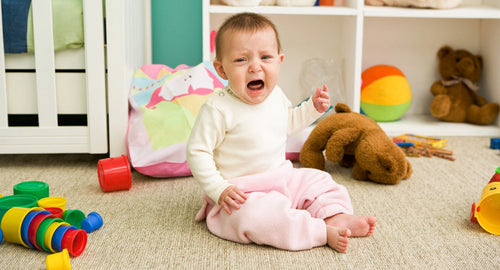
There are children who, when their friends steal their toys, just cry and don't know what to do. These children often have weak personalities and are easily in a passive and vulnerable position when they grow up.
Don't cry, don't ask for it back and switch to another toy
There are some children who, when their friend steals their toy, don't cry or ask for it back, but instead switch to playing with something else. These children are classified as having a rather generous personality. However, this is also a group of people who are easily bullied and often have their toys stolen. In the future, children may be too permissive and constantly suffer disadvantages when interacting with others.
Directly reclaim your toys
In addition to the two reactions mentioned above, there are also children who have quite strong reactions when their friends take away their toys. They may or may not cry, but they all fight directly to get the toy back. These children often have courageous personalities and dare to protect their own rights.
With such children, parents should help them understand that their actions are not wrong, but they should not use force to solve the problem because it can cause harm to both you and yourself.

Instructions on how to teach children to handle situations when their friends take away their toys
Teach children to refuse strongly and firmly
Children often tend to step forward if they see that the other person is weaker than them. But when they encounter a stronger, more fierce opponent, they will shrink back in fear. Therefore, when encountering a situation where a friend takes away a toy, parents can teach children to handle the situation with short, decisive statements such as: You can't take it, it's mine; I don't agree, please return it to me; I'm playing; You have to borrow it from me, you can't take it arbitrarily.
At the same time, parents can teach children to use body movements to show fierceness such as leaning on their hands, holding onto toys firmly, and showing anger and seriousness.
Teach children how to deal with hypothetical situations
Parents can create a few hypothetical situations to help children get used to them. When children get used to handling situations, it will be easier for them to prevent this.
Parents and children play the game "steal the toy", tell the child "When mom or someone takes your toy, say loudly "This is my toy, you can't take it"... Beside Meanwhile, parents teach children how to protect their toys, such as holding the toy behind their back or putting it on top of their head so that the other person can't get it right away.
In case the opponent is taller and stronger and the child is unable to stop, speak firmly and strongly. If the other person has an aggressive attitude and rushes in to win, leave to avoid getting hurt.
Encourage and encourage your child to protect himself and take back his toys
When children cry and feel sad because their toys are taken away, parents should soothe their children's emotions. Parents should not blame or scold their children for being shy, weak, or lacking confidence. Instead, motivate and encourage children to protect themselves and get their toys back. If the child does not know how to get the toy back, parents should take the child to face the other child, ask to return the toy or suggest that both parties play together...
Of course, parents cannot always solve problems on behalf of their children, but need to let them learn and face it themselves. Only then can children grow up and protect their property rights better.
With the above ways of teaching children to handle situations, we hope to help parents have more tips on how to raise their children best. Children who know how to handle situations when their friends take away their toys will have a good sense of protecting their rights, while also increasing their confidence and bravery. Don't forget to follow the articles in Mykingdom's Handbook section for more useful information.