After a long day at work, parents often feel puzzled when their child asks to watch YouTube while they themselves run out of ideas for play. In fact, playing with your child doesn’t require screens and doesn’t demand elaborate preparation. With just 15–20 minutes and the following suggested games, your child will be eager to join in right away!
Why do children need more screen-free playtime?
-
Recommendations from WHO and AAP: The WHO recommends that children under 2 should not use screens; children aged 2–4 should be limited to a maximum of 1 hour per day; the AAP also emphasizes that parents should accompany and curate content for their child. Most importantly, digital devices should not overpower sleep, physical activity, and family interactions.
-
Engage focus through the hands: Instead of passively receiving images, non-screen activities for children such as play-dough, stringing beads, or building help develop fine motor skills, extend concentration, and naturally spark imagination.
Three principles to help parents play with their child more easily
-
No time pressure: Just 15–20 minutes fully dedicated, giving your full attention to your child rather than sitting for an hour but being distracted by work.
-
No imposing how to play: Respect your child’s ideas and let them act as the "director" of the play. Parents simply need to be there as a safe guide.
-
Play corner always ready: Arrange drawing paper, colored pencils, or building blocks on a low shelf at eye level so the child can easily initiate play rather than reach for the phone.

10+ screen-free game ideas for your child right at home
Group 1: Role-play and life-simulation games
Young children learn about the world around them by observing and imitating adults. Role-playing games are a wonderful opportunity for them to learn new vocabulary and practice natural communication.
Game 1: The little chef in training
Parents can set up a mini restaurant right in the living room. The child will take the role of the chef preparing the dishes, and parents act as customers ordering, asking about the menu, and paying with toy money.

Kitchen play sets for kids such as a kitchen set, a food cart with tiny details like spoons, forks, and small pots and pans will be visual props to help your child enthusiastically show off their cooking skills.
Game 2: Your child builds stories with the little friends
Together with your child, arrange a living space for stuffed animals or dolls: prepare breakfast, take the friends to school, or organize a birthday party.
When playing, parents can prompt: "What fun thing happened to the bunny today?" to encourage your child to tell their own story.

The world of dolls Barbie with detailed houses and outfits is an ideal choice to help your child practice expressing emotions and sharing.
Game 3: The child becomes a rescue hero
Create a simple pretend scenario: a stuffed bear stuck on top of the sofa needs rescuing, or a stack of books toppled across the path needs clearing. The child will move vehicles to the scene and resolve it.

Vehicles and the little rescue squad Paw Patrol (such as fire dog Marshall, police Chase) or Bruder construction vehicles will inspire your child to learn to analyze and solve challenges.
Group 2: DIY crafts and creative fashion play
Arts and crafts give children joy as they create items with their own personal touch.
Game 4: Design friendship bracelets together
Mom and child can choose colors together, string beads to create two matching bracelets for mom and child or make gifts for a close friend at school.

The Make It Real craft kit with a variety of beads, cords, and decorative charms will provide an enriching playtime, training your child patience and the dexterity of their fingers.
Trò chơi 5: Bé tự thiết kế chiếc túi của riêng mình
With the DIY toy accessories kit for girls My Vibe, the child can manually assemble pieces, attach handles and bows without complicated sewing.

After finishing, parents can play the role of guests at a "mini fashion show" in the living room so the child can confidently present the finished product they made with their own hands.
Trò chơi 6: Cùng con vẽ tiếp sức
Parents draw a single curved line or a basic circle on the board, then hand the marker to the child to add details to complete the picture.

PAB034 Green GROWN UP Multi-Purpose Drawing Board with one chalkboard side and one marker board side will allow the child to stand and draw comfortably, helping them freely wield the marker without worrying about ink marks on the walls.
Group 3: Assembly games and thinking development
On weekends, thinking games that involve the whole family create a vibrant, exciting atmosphere.
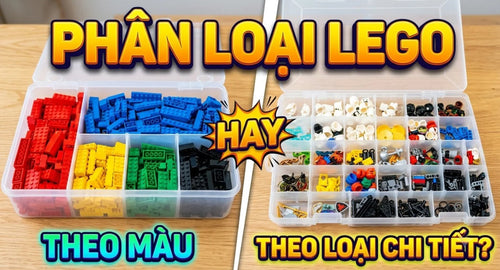
Game 7: LEGO building challenge
Give the whole family a common theme: build the house of your dreams, design a sturdy bridge, or create a unique vehicle.
Depending on your child’s age, parents can choose the appropriate LEGO line: from the large, safe LEGO DUPLO bricks for toddlers (from 1.5 years old), the LEGO Classic bricks for unlimited creativity, to the immersive role-playing worlds of LEGO City or LEGO Friends.

This activity stimulates spatial thinking and flexible problem-solving abilities.
Trò chơi 8: Cùng con nặn thế giới sắc màu
Playdoh soft dough with many bright colors is a wonderful tool for the whole family to model various fruits, cakes, or cute animals, then set up a charming candy display stall.

Trò chơi 9: Thử thách rút gỗ khéo léo
Take turns removing one wooden block from the tower and placing it on the top without toppling the tower. The classic Jenga game from Hasbro Gaming helps children practice caution, understand gravity, and learn to stay calm.

Trò chơi 10: Khám phá ván cờ Monopoly
For kids aged 8 and up, an official Monopoly board game provides an engaging battleground of wits. The game helps children become familiar with basic spending concepts, learn to follow rules, and positively handle winning or losing.

Group 4: Interactive games that don’t require specialized toys
Parents can start playing with their child at home tonight using simple traditional games and brain-teasing activities:
Trò chơi 11: Đố vui đoán tên đồ vật
Parents describe the function or features of an item in the room (for example: "This object is rectangular, usually sits on the table, and helps the family tell time?"), so the child guesses and fetches that item. The game helps boost the child’s language responsiveness and observational skills.

Trò chơi 12: Truy tìm kho báu trong nhà
Hide a small toy or a piece of paper with a hint drawing under a pillow or in a drawer. Parents use the commands "Hot" (when the child is near) and "Cold" (when the child is far from the target) to guide the child to find the treasure. The cheering when the target is found will fill the playtime with positive energy.
Safety note: For toys with small parts like beads, tiny components, or dice, parents should ensure products are age-appropriate as indicated on the packaging and always supervise when playing with young children.
What should parents do to help children gradually reduce screen time?
Instead of rigidly banning, parents can gently adjust the routine for their child through three steps:
-
Agree on clear time windows: Set rules with your child about when to watch during the day, with durations appropriate for each age.
-
Give a 5-minute heads-up: Offer a gentle heads-up ("We’re wrapping up now; let’s put the devices away") so the child can prepare mentally and avoid frustration when interrupted.
-
Suggest replacement games: Rather than saying "No more screen time," actively invite your child: "Let’s string bead bracelets" or "Dad and I can race to pull out some blocks" to naturally bring them back to the real world.
Spending time playing with your child without a screen is the sweetest way for parents to nurture affection and create meaningful childhood memories together.
Parents, visit the nearest Mykingdom store or go online to choose authentic, safe toys that are ready for a laughter-filled playtime tonight!